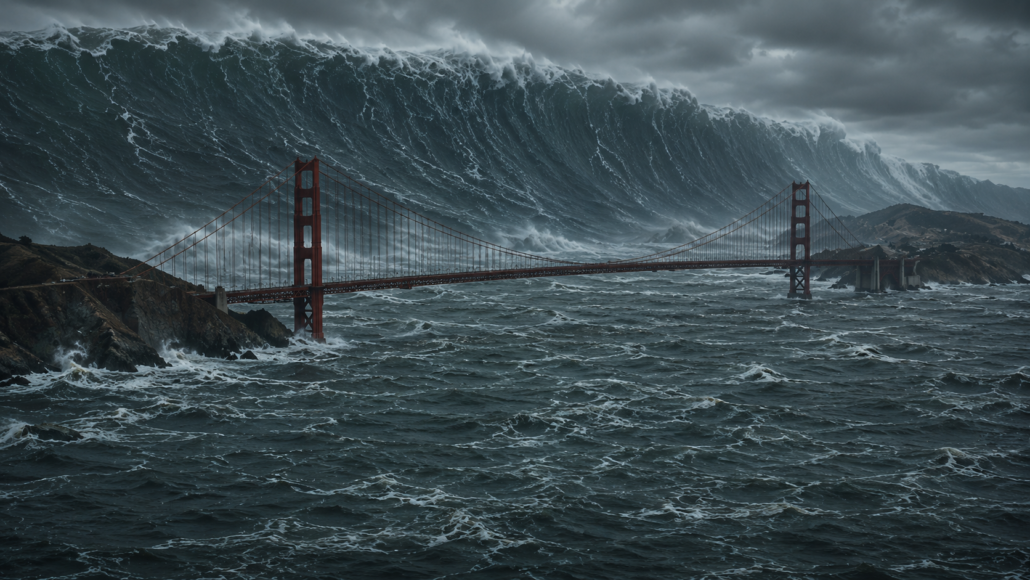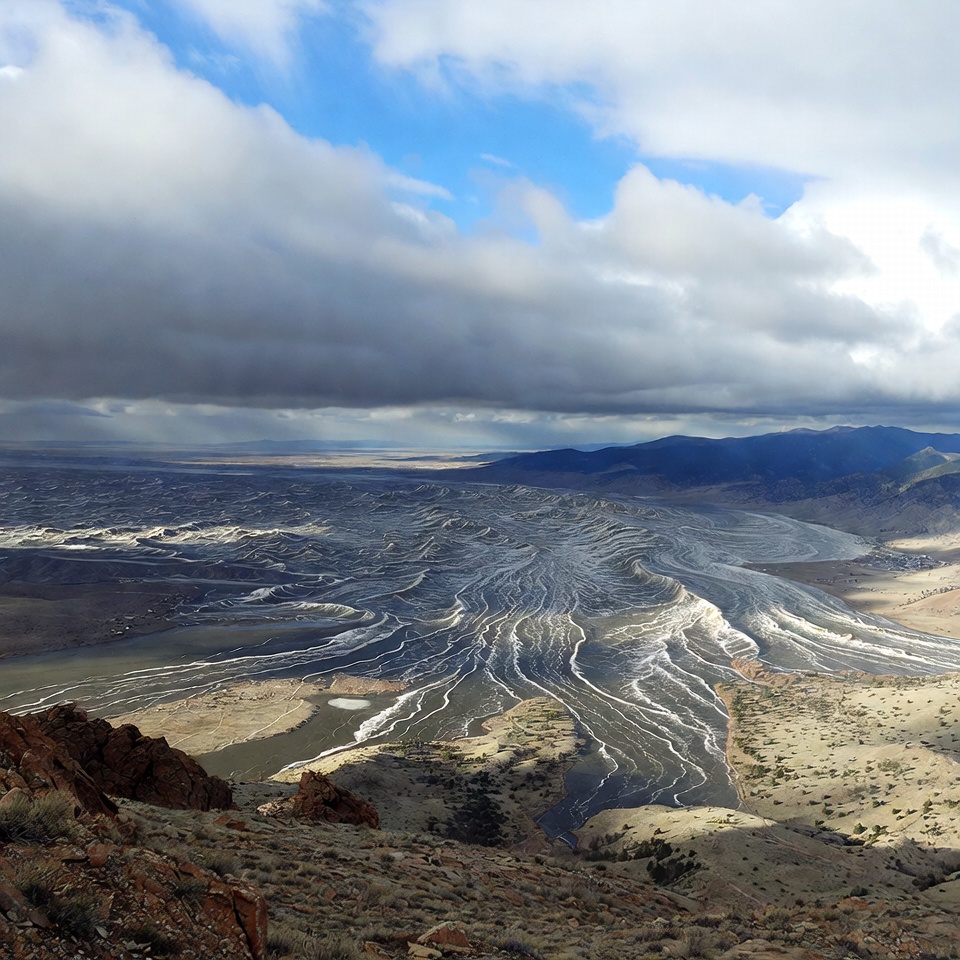
I experienced a bit of a breakthrough on the ECDO simulation program thanks in large part to mistakenly calling out a potential “hole” in the ECDO theory as it relates to the Kahfre Pyramid and water height during State 2 pre-transition.
The Gap / Incorrect ECDO Simulation
For the last month or longer, I’ve been adding new physics modeling to the simulation and none of the additions changed much within the simulation. It led me to think that perhaps I was nearing completion with this application.
Boy was I wrong. After posting on X that I thought there might be a “hole” in that ECDO theory, The Ethical Skeptic himself responded and kindly informed me that I was incorrect. Even better (or worse lol), his community reached out to begin asking questions about what was running under the hood.
Through that interaction, I found that I had nothing accounting for Earth’s oblateness at the equator and poles that would drastically alter land elevation at both regions.
This breakthrough led to a few days of work, but these early beta tests are so promising I had to share as the water height in the Giza region is within range to cause the oceanic water damage to the top of the Kahfre Pyramid.
Let’s get into both new ECDO simulations.
ECDO Simulation State 1 to State 2
We’ll start with the full orbital view of this transition and then break things out with a direct overhead view of each major continent.
This view is just to see the overall orbital motion. I’ve created continental views to help zoom in on a specific area of Earth.
North America
As you can see, North America will get absolutely decimated by the ECDO flip. It would align with several other evidence points that I plan to cover in future posts.
Europe
Worse than North America, Europe has the unfortunate move towards the equator. The question then becomes how quickly will Earth’s oblateness push the land higher. I assume the water will move faster than the earth’s plates to adjust, so we see total inundation.
You will see in State 2 that eventually the land deformation adjusts and the waters recede a bit from Europe before the State 2 trigger back to State 1.
Africa
The torque of motion affects Africa less than most regions, but the oblateness of the Earth will alter the landmass in ways that will cause much of it to be under the sea by the time State 2 is ready to move back to State 1.
Asia
Asia is another continental landmass that ends up suffering the most due to the equatorial position and elevation changes brought by the Earth’s oblateness.
However, it is also the continent that has my least confidence level given the height of elevation in the interior of the continent and the water heights being reported.
Oceania
Australians will have some forewarning during the megaquakes to get to higher ground, but there is no outrunning the masses of oceans being displaced. I had to extend this playback, since Australia got hit multiple times by slosh before the ECDO simulation completed.
However, once the water and lands settle, most of Australia ends up above the water line for State 2.
South America
In one of the safest regions in the world if ECDO ends up being correct, South America suffers moderate inundation in the south, but remains mostly clear of inundation in the north. The worry there will be the massive megaquakes that are sure to cover the entire globe. The Andes make for a fantastic barrier to the Pacific in this ECDO simulation.
ECDO Simulations State 2 to State 1
Again, we’ll start with the orbital view here and then into each continent. The water levels here are showing what areas of the current continents would be above sea level at the onset of the State 2 transition back to State 1.
None of us will live to see this event, but it helps in terms of tracking the geological evidence of these theoretical ECDO simulation events.
You can see by the time the water and lands settle, the ocean levels have stabilized to new heights. There would be new land masses too, but I am not tracking those.
North America
The flip from State 2 to State 1 is not as catastrophic for North America due mostly to the forcing flowing into the continents highest elevations.
Europe
After getting absolutely obliterated in the first state switch, Europe again takes a hard punch to the face here. Not has bad as the original State 1 to State 2 switch, but bad enough to sad goodbye to any unfortunate souls to survived the first go around.
Africa
Despite having a relatively easy State 1 to State 2 switch, the ECDO simulation for State 2 back to State 1 shows Africa taking the brunt of the equatorial bulge from the south that speed runs across the continent.
One important thing to note about this State 2 move in Africa is where the water level is in Egypt here. The main image of this post showing water levels at the peak of the Great Pyramid of Kahfre is about exactly where the water levels are here in this ECDO simulation. Which was quite the promising development in my work on this software program.
Asia
By the time State 2 is ready to move back to State 1, Asia has mostly settled completely and all water receded from the continent. However, the move back is still violent enough to send displacement through much of the European and Middle East end of the land mass. China escapes relatively unscathed.
Oceania
Australia is in a tough spot in these ECOD simulations. The landmass is not large enough nor are the mountain ranges high enough to escape large scale inundation levels. The tactic of getting to high ground and preparing to float away may be the best option for Aussies. Though State 2 to State 1 seems to offer better survivability.
South America
Once again, South America seems like one of the strongest candidates for survival from this event. The Andes do take a harder punch from the Pacific on the move back, but much of the continent to the south escapes inundation in the State 2 to State 1 ECDO simulation.
My simulation program stops a bit short of the settling period post state change. I think I will try to expand that further to really help us see what both end states look like more clearly.
While the focus here is obviously on the water levels, this simulation would suggest massive mega worldwide earthquakes and destructive atmospheric disturbance and wind speeds. Surviving this is going to be a roll of the dice for anyone outside of the low torque zones.
This is the first beta run with the updated physics model added to the program. The results are very promising and I’ll likely continue to have many more weeks of testing before I’ll consider listing this software for the public to use.
Until then, I’ll definitely be adding more ECDO simulations to this blog and over on X so stay tuned for those future updates!